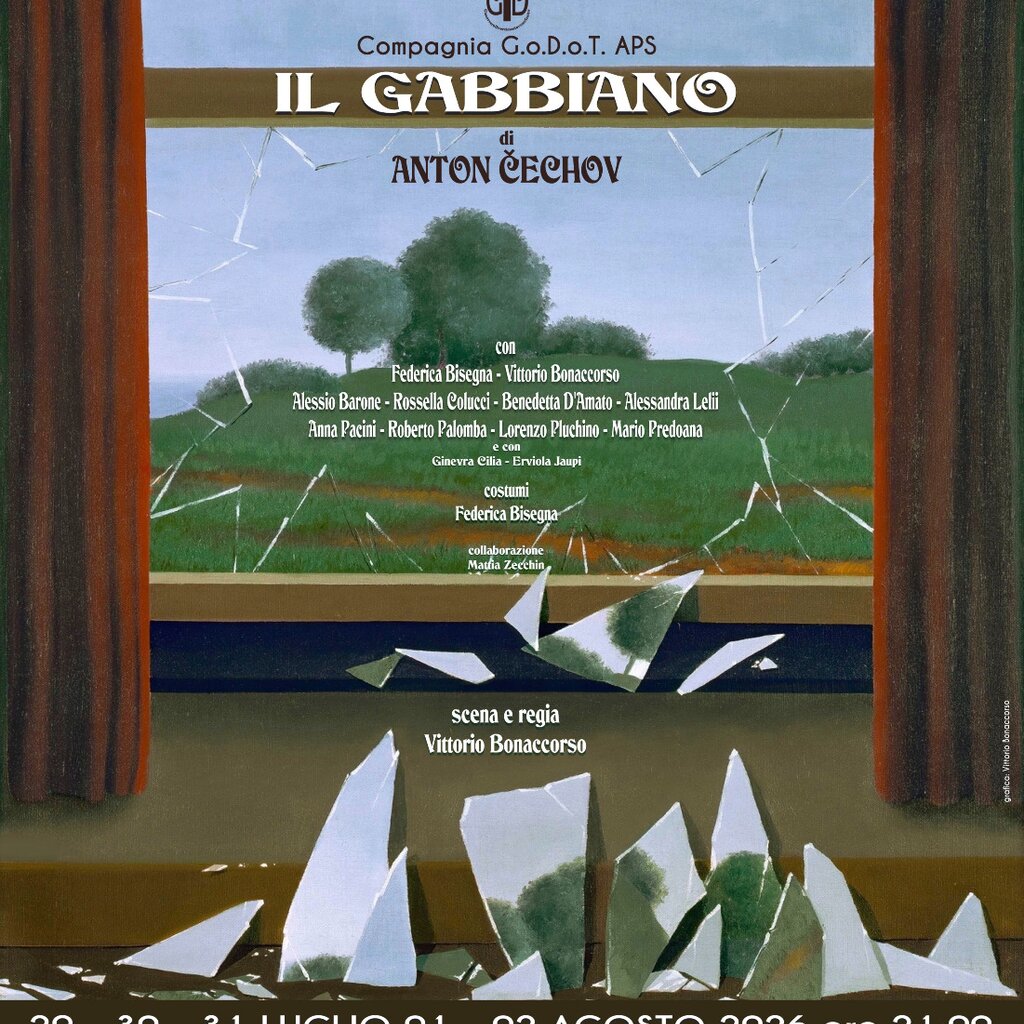
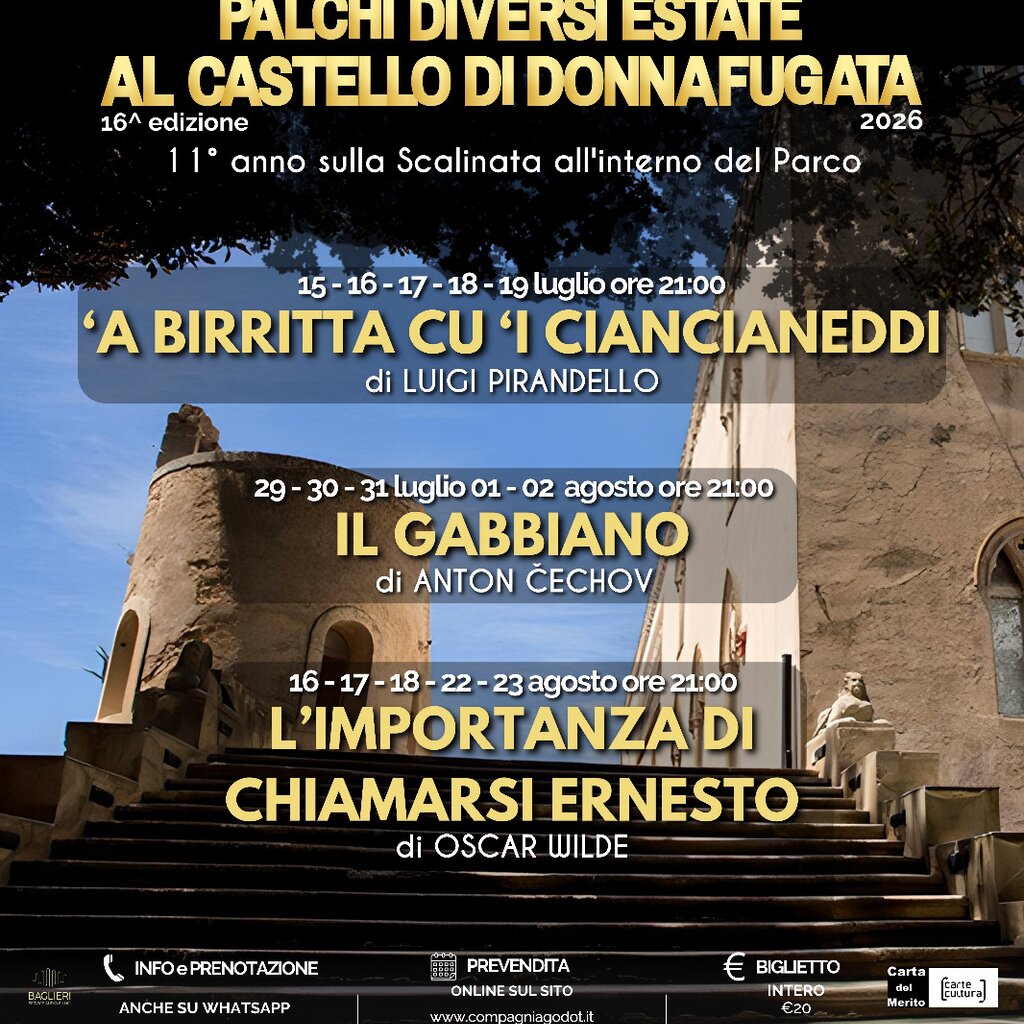
Anton Chekhov's "The Seagull" is elusive to definitions: is it a drama? A comedy (as defined by the author himself)? A tragedy? One could define it as a "modern tragedy", so much so that it can be considered the beginning of contemporary theatre, the birth of a new stage sensibility that profoundly influenced all the drama of the 20th century. It could be called a sort of "Midsummer Night's Dream" without magical interventions, in which no one loves those who could love him back. The play, after the fiasco of the first (1896), became a masterpiece thanks to the collaboration with Stanislavsky who staged it for the Moscow Art Theatre in 1898; the director focused on stage truth, transforming the "lack of action" into an intense emotional conflict apparently invisible in the dialogues. A text that shows the contrast, in perfect balance, between the existential ugliness of those who are afraid of living by being crushed by routine (suffocating their aspirations), and the courage of those who get involved (trying to satisfy them – even without ever having the certainty of being able to succeed). In the heart of a country estate, artists, writers, actresses and dreamers wonder about the meaning of art and life. Konstantin wants a new theatre, free from conventions, able to tell the emptiness and restlessness of his time. Nina sees in theatre the possibility of rising above the banality of existence. Arkadina and Trigorin, on the other hand, embody artistic success and its shadows: fear of decline, selfishness, the distance between talent and happiness. The seagull — the central symbol of the work — becomes a metaphor for the human being and the artist himself: a vulnerable creature, suspended between the desire to fly and the brutality of reality. In Chekhov's poetics, art does not offer definitive answers or absolute heroes. The theatre becomes a profound observation of life, its contradictions and the silent pain that each individual goes through. For Chekhov, the artist must not judge the world, but understand it and show it in its complexity, revealing the truth hidden in everyday gestures, failures and unexpressed desires. In this text, the meaning of life is inevitably intertwined with the need to create, love and be recognized. In the past, the G.o.D.o.T. Company has dealt with Chekhov's works in the staging of a collage entitled "Chekhov in the hallway", where the author's most famous humorous texts were mixed, but it is the first time that it deals with one of his masterpieces, placing it in the now usual, but always fascinating, frame of the Staircase (our Vertical Stage). A poetic and human journey of surprising topicality within the fragility of existence, and through the urgency of making art as a last attempt to give meaning to our time on this planet. A theme dear to us, which we have already addressed with the staging of The Giants of the Mountain by Pirandello, one of our most beautiful and intense productions of Palchi Diversi Estate at the Castle of Donnafugata. (Vittorio Bonaccorso)
For information and reservations, please call 328.2553313, 339.3130315, 329.1421719, 339.3234452, 338.4920769, or WhatsApp, or email info@compagniagodot.it.
Reservations and advance tickets are available online at www.compagniagodot.it or at Maison GoDoT at Via G. Carducci, 265 in Ragusa from 5:30 PM, and at the Parisi jewelry store in Marina di Ragusa.
or at Maison GoDoT at Via G. Carducci, 265 in Ragusa from 5:30 PM, and at the Parisi jewelry store in Marina di Ragusa.You can benefit from the Teacher Card and Culture Cards. A special offer is available for students enrolled at the University of Catania. Reduced-price tickets are available for G.o.D.o.T. cardholders and children under 12.
Plot: In Uncle Sorin's country estate, one-way passions intertwine. The young and tormented writer Kostja is in love with Nina, an aspiring actress. Nina, however, is fascinated by the famous writer Trigorin, who in turn is the lover of Kostja's mother, the famous actress Arkadina. Kostja stages an avant-garde play to conquer Nina and establish himself as an artist, but his mother mocks the show, causing the play to stop and throwing her son into despair. Nina and Trigorin start a relationship and move to Moscow. Here the young woman suffers a bitter disillusionment: she has a son by Trigorin who dies prematurely, her acting career is struggling to take off and the writer abandons her to return to Arkadina's arms. After two years, the characters find themselves in the same estate. Nina, now disappointed and worn-out, meets Kostja one last time, declaring that she is still in love with Trigorin, and then leaves for a theatrical tour in the province. Abandoned by everyone and aware of his emotional and artistic failure, Kostja commits suicide by shooting himself with a gun